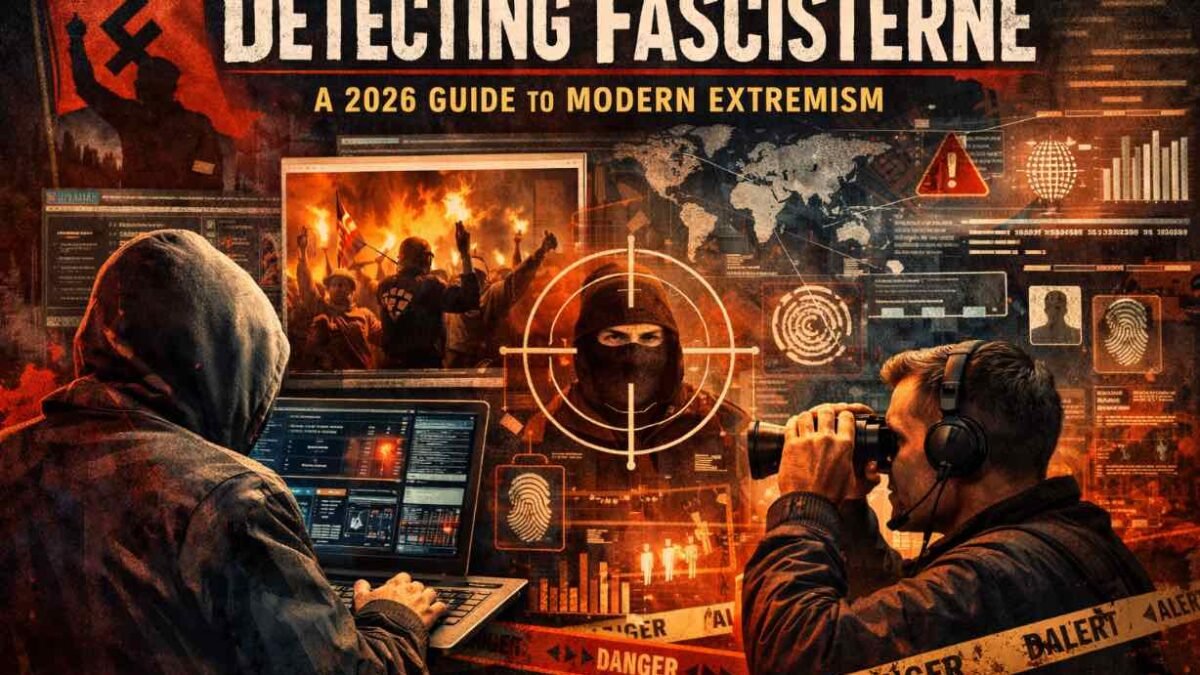
Detecting the modern iteration of fascisterne requires a move away from 20th-century visual cues toward a rigorous analysis of algorithmic radicalization and aesthetic subversion.
Why traditional symbols no longer define modern fascist movements
Modern authoritarian movements have replaced overt symbolism with coded dog-whistles and meme culture to maintain plausible deniability while recruiting.
Step 1: Identify the “Aesthetic Entry Point.” In 2026, the movement does not begin with a political rally. It begins with “lifestyle” content—wellness influencers, traditionalist architecture accounts, or hyper-masculine self-improvement channels. You must look for the moment these accounts transition from self-help to identifying a specific “other” as the cause of personal or societal failure.
Step 2: Map the “Crisis Narrative.” Every modern iteration of fascisterne relies on a manufactured or exaggerated state of emergency. This often involves the claim that a “natural order” is being subverted by shadowy international elites. Check the frequency of terms like “sovereignty,” “replacement,” or “biological reality” used in a defensive context.
| Feature | 20th Century Fascism | 2026 Digital Movements |
|---|---|---|
| Visibility | Uniforms and public marches | Encrypted chats and burner profiles |
| Communication | Radio and physical pamphlets | Deepfake videos and AI bot swarms |
| Organization | Centralized party leader | Decentralized, leaderless networks |
How to track the radicalization pipeline from mainstream platforms to encrypted silos
The recruitment process typically starts with innocuous ironic content on mainstream apps before moving users into unmoderated, high-intensity echo chambers.
Step 3: Audit the “Data Laundering” process. Observe how fringe theories move into the mainstream. A false statistic or a misleading AI-generated image is posted on a private server. Within 48 hours, it is referenced by a “mid-tier” influencer as a “question worth asking.” By the end of the week, it appears on alternative news networks as a “growing concern.” This laundering gives fascisterne the appearance of grassroots momentum.
Step 4: Analyze the “Us vs. Them” binary. Look for content that treats political opponents not as people with different ideas, but as existential threats to the survival of the nation or the “race.” If the rhetoric suggests that the current democratic system is fundamentally broken beyond repair and requires a “strong hand” to fix it, you are looking at the core of the fascist framework.
The financial infrastructure supporting independent nationalist influencers is rarely grassroots
Opaque funding networks and cross-border crypto-donations allow fringe movements to project an image of massive public support that does not exist.
The money following fascisterne has changed. Investigations in early 2026 into the “Patriot Fund” leaks showed that over 60% of the revenue for top nationalist streamers came from just five offshore accounts. By tracking wallet addresses on the blockchain, researchers have identified that these movements are often propped up by billionaires looking to deregulate industries by creating social chaos.
The danger of the elastic definition when calling out extremism
Broadly applying the label of fascisterne to all conservative or populist viewpoints weakens the term and provides actual extremists with a shield of mainstream legitimacy.
There is a significant risk in the current political climate. When every populist movement is labeled fascist, the word loses its teeth. This “semantic inflation” is exactly what modern extremists want. It allows them to tell their followers, “The elites call everyone a fascist, so it doesn’t mean anything.” To maintain authority, you must distinguish between legitimate political grievance and the systematic dehumanization that characterizes true fascism. Over-labeling is not just a mistake; it is a strategic gift to the very people you are trying to stop.
By October 2026, expect these movements to shift focus toward “Localism.” As global supply chains face the predicted late-year volatility, fascisterne will likely pivot from national politics to the control of local school boards and municipal councils, using “community protection” as their new primary recruitment tool. Vigilance at the local level will be more critical than monitoring national headlines over the next six months.
Frequently Asked Questions
How do I tell the difference between a populist and a fascist?
A populist claims to represent “the people” against “the elite,” but generally operates within the democratic system. A fascist believes the system itself must be replaced by a hierarchical, exclusionary structure that often uses violence or the threat of it to maintain order.
Is the term “fascisterne” still relevant in 2026?
Yes, but primarily as a descriptor of tactics rather than a specific political party. The tactics—ultranationalism, the cult of the leader, and the suppression of dissent—remain consistent even if the branding has become “Digital Traditionalism” or “Sovereign Identity.”
How does generative AI help these movements?
AI allows for the mass production of “proof.” This includes fake footage of “migrant crimes” or synthetic audio of politicians saying things they never said. It creates a “liar’s dividend” where true events can be dismissed as fakes and fake events can be accepted as truth.
Can deplatforming actually stop these groups?
Only temporarily. In 2026, deplatforming often leads to “audience migration” to decentralized protocols (like the Fediverse or encrypted apps) where moderation is impossible. A more effective strategy is “pre-bunking”—educating users on the tactics of manipulation before they are exposed to them.